AI Coding Agent Observability: See What Your Team Did (2026)
AI coding observability is a searchable, shareable record of what your team's agents did. Learn how to track agent sessions across people, repos, and tools.

A staff engineer opens a pull request. Sixty percent of the diff was written by an AI coding agent. The code looks reasonable, the tests pass — but the reviewer has zero visibility into what the agent actually tried, what it rejected, and why it landed on this approach. The exploration that produced the answer has already evaporated. This is the blind spot at the center of modern engineering, and it's why ZeroShot (BuildBetter CLI) exists: to make AI coding agent activity observable across people, repos, and tools. This guide explains what AI coding observability means for teams — not individuals — and how to build a searchable, shareable record of what your agents actually did.
The Blind Spot: Your Team Ships Agent Code You Can't See
By 2026, AI-generated code routinely accounts for 40–60%+ of the diff in pull requests at AI-forward engineering organizations — yet reviewers have near-zero visibility into how that code came to be. The agent's prompts, rejected edits, dead ends, and decision rationale all disappear the moment the session window closes.
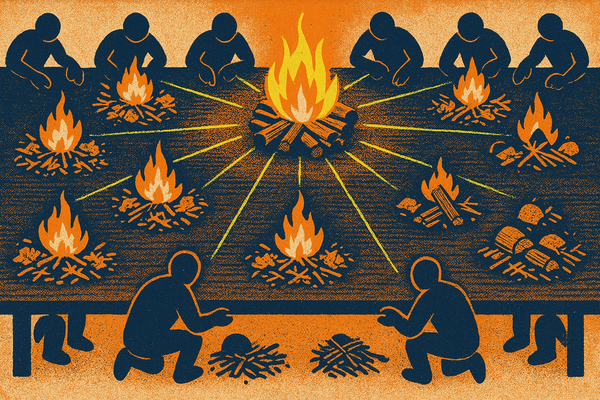
The problem is precise: agent activity is invisible at the team level. One engineer's Cursor history doesn't reach the engineer next to them. A debugging path that took two hours to discover lives only in a chat log that gets cleared. The most expensive part of the work — the reasoning — is the part that's hardest to recover.
The cost compounds quietly:
- Duplicated exploration: two engineers spend a day each chasing the same rejected approach, unaware a teammate already abandoned it.
- Onboarding friction: new hires reverse-engineer features from final diffs instead of reading how they were actually built.
- Audit gaps: no defensible record of what AI generated or what a human reviewed.
- Lost institutional knowledge: a senior engineer's hard-won context vanishes when they switch tasks.
The thesis of this guide is simple: observability for AI coding isn't a dashboard of token counts. Vanity usage metrics tell you nothing about whether agent output was correct, reviewed, or reusable. Real observability is a searchable, shareable history of what agents actually did.
What Is AI Coding Observability (For Teams, Not Individuals)?
AI coding observability is a searchable, shareable record of agent sessions — the prompts, edits, decisions, and rejected paths — indexed across repo, branch, PR, and teammate. It treats the development process itself as the system under observation.
This is a different discipline from traditional observability. The classic three pillars — metrics, logs, and traces — watch running production systems. AI coding observability watches the creation of code: what the agent was asked, what it explored, and why a particular approach won.
Three things people conflate
- Usage analytics: how many seats and tokens you consume. Useful for finance, useless for engineering judgment.
- Session history: what one person's agent did, visible only to that person.
- Team observability: what every agent did, searchable by anyone.
Only the third is observability in the meaningful sense. The first two are precursors at best.
Why per-tool history isn't observability
Built-in agent history is both siloed and ephemeral. Cursor's history is separate from Claude Code's history. Both are typically cleared on session close — not indexed, not shared, not queryable by a teammate. As one engineering principle puts it: treat agent sessions like institutional memory, not chat logs.
The minimum bar for true team observability: cross-agent, cross-teammate, persistent, searchable, and shareable. Anything less is just three separate silos.
Why It Matters: Four Concrete Use Cases
The bottleneck in software engineering has shifted from writing code to understanding, reviewing, and coordinating what agents produce. Each of the following use cases attacks that new bottleneck directly.
1. Onboarding
Engineering onboarding to productive contribution traditionally takes three to six months at mid-size SaaS companies. With readable agent session history, a new engineer can read how a feature was actually built — the prompts, the conventions, the decisions — instead of reverse-engineering intent from a final diff. The ramp compresses because the reasoning is no longer locked inside one person's terminal.
2. Audit and compliance
Regulated teams need a defensible record of what AI generated, what a human reviewed, and what decisions were made. AI code provenance — a clear audit trail tying generated code back to prompts and reviewers — turns "we think a human looked at this" into evidence. This is why teams like Brex, Lufthansa, and Procore care about an indexed history, not a transient chat window.
3. Learning from what worked
Successful patterns are worth promoting into reusable conventions. When a teammate's agent solves a thorny migration cleanly, that approach should become a shared skill — not something every engineer rediscovers independently.
4. Not repeating dead ends
The most valuable artifact from a session is frequently the negative space: the approaches tried and rejected, and the reasons why. Searchable cross-agent history lets you ask "has anyone tried X?" and discover that a colleague's agent explored and abandoned it last week — eliminating a recurring hidden cost in engineering productivity.
What Good Observability Actually Captures
Good AI coding observability captures the reasoning behind the code, not just the code. Final diffs hide the most useful information; a strong system surfaces it.
- Prompts and intent: the goal the engineer gave the agent — the "why" behind the work, not just the output.
- Edit history and rejected alternatives: the paths explored and abandoned. This negative space is often more valuable than the final code because it prevents others from repeating the same dead ends.
- Decisions and rationale: why a particular approach won over the alternatives.
- Context linkage: every session tied to the repo, branch, PR, and the teammate who ran it — so any artifact is traceable.
- Cross-agent normalization: a unified view whether the work happened in Claude Code, Cursor, Codex, Copilot, Gemini CLI, Windsurf, or Amazon Q.
That last point is non-negotiable for real teams. Engineering organizations are polyglot in tooling — one engineer in Cursor, another in Claude Code, a third in Codex CLI. Without normalization, "team observability" collapses back into separate silos.
How ZeroShot Makes Agent Sessions Searchable and Shareable
ZeroShot (BuildBetter CLI) is the evidence-based context and memory layer that sits underneath the AI coding agents your team already uses — making their work searchable, shareable, and reusable across the whole team. It is not another agent. It's the memory and skills layer that makes Claude Code, Cursor, Codex, and others work together.
Search it
Every coding session is saved and indexed across the team — queryable by topic, file, teammate, or decision. "Did anyone touch the billing webhook last sprint?" becomes a search, not a Slack archaeology project.
Share it
With bb agent-sessions resume, you can pick up any teammate's session on your machine, in any agent. That's context handoff without a meeting — the cross-agent session memory that turns individual work into team capability.
Learn from it
Successful patterns become BB-Skills — reusable commands like /bb-review, /bb-specify, and /bb-plan that encode your team's conventions into future sessions. Your standards stop living in a wiki nobody reads and start living inside the agent.
Honest framing and privacy
Layering, not replacement, is the correct adoption strategy. Teams have already standardized on their agents; ZeroShot sits underneath them rather than forcing a migration. It's privacy-first — nothing leaves your repo without consent — and BB-Skills is open source at github.com/buildbetter-app/BB-Skills, built on the open AGENTS.md standard, so teams can audit exactly what it does.
ZeroShot is already used by Brex, Rappi, PostHog, AppFolio, Clay, Lufthansa, Procore, and Macmillan — credibility earned by solving the team-coordination problem, not by adding another model to the stack.
ZeroShot vs. Per-Tool History and Other Approaches
ZeroShot is the only approach that combines cross-agent memory, team-convention skills, and customer evidence in one layer. Here's how it compares to per-tool history and other categories of tooling — fairly assessed.
| Approach | Cross-agent | Cross-teammate session resume | Persistent searchable history | Team-convention skills | Customer-evidence-aware | Open source |
|---|---|---|---|---|---|---|
| ZeroShot (BuildBetter CLI) | ✅ | ✅ | ✅ | ✅ (BB-Skills) | ✅ (via BuildBetter.ai) | ✅ (BB-Skills) |
| Cursor (built-in history) | ❌ | ❌ | Partial / siloed | ❌ | ❌ | ❌ |
| Claude Code (built-in history) | ❌ | ❌ | Partial / siloed | ❌ | ❌ | ❌ |
| Devin (autonomous agent) | ❌ | ❌ | Per-agent | ❌ | ❌ | ❌ |
| Cody / Augment | Partial | ❌ | Partial | ❌ | ❌ | ❌ |
| ContextPool / Graphiti | Partial | ❌ | ✅ (memory) | ❌ | ❌ | Varies |
To be fair to each:
- Per-agent tools (Cursor, Claude Code) have rich in-tool history — but it's siloed to that agent and that user, and often ephemeral.
- Context/memory tools (ContextPool, Graphiti) provide memory, but not cross-agent team observability or convention-encoding skills.
- Devin is an autonomous coding agent, not an observability layer over the agents you already run.
ZeroShot's distinctive position is the combination: cross-agent memory plus team skills plus customer evidence pulled in from BuildBetter.ai. No other approach delivers all three.
How to Set Up AI Coding Observability for Your Team
Setting up team-level observability with ZeroShot takes five steps and requires no migration off your existing agents.
Step 1: Install the bb CLI under your existing agents
Install the bb CLI and connect it beneath the agents your team already uses. No one switches off Cursor or Claude Code — ZeroShot layers in underneath.
Step 2: Enable session capture
Turn on session capture so prompts, edits, and decisions are indexed automatically. This is the moment ephemeral chat logs become persistent, searchable institutional memory.
Step 3: Encode your conventions as BB-Skills
Translate your team's standards into BB-Skills that extend the AGENTS.md standard. Code review norms, spec templates, and planning patterns all become reusable commands every agent can invoke.
Step 4: Establish team norms
- Search before you start — check whether a teammate's agent already explored this.
- Resume teammates' sessions with
bb agent-sessions resumeinstead of scheduling a sync. - Review with
/bb-reviewso every PR gets your team's conventions applied consistently.
Step 5: Measure the win
Track the metrics that matter: reduced onboarding time, fewer duplicated explorations, and faster PR reviews. Because code review is consistently cited as a top-three delivery bottleneck — with review wait times often exceeding actual coding time — improvements here move your whole delivery pipeline.
Frequently Asked Questions
What is AI coding observability?
AI coding observability is a searchable, shareable history of what AI coding agents did across a team — the prompts, edits, decisions, and rejected paths — tied to the repo, branch, PR, and teammate who ran each session. Unlike traditional observability that watches running systems, it observes the development process itself.
How is team observability different from my agent's built-in history?
Built-in history (in Cursor, Claude Code, etc.) is siloed per agent and per user, and is often ephemeral — cleared when the session ends and not indexed or shared. Team observability indexes every session across all agents and all teammates, then makes it searchable and resumable by anyone on the team.
Does ZeroShot replace Claude Code or Cursor?
No. ZeroShot is the context/memory and skills layer that sits underneath the agents you already use. It makes those agents work together across the team and persists their work — it does not replace any agent.
Is my code or session data private?
Yes. ZeroShot is privacy-first — nothing leaves your repo without consent — and BB-Skills is open source on GitHub, so teams can audit exactly what it does.
Which agents does ZeroShot support?
Claude Code, Cursor, Codex, GitHub Copilot, Gemini CLI, Windsurf, and Amazon Q — integrated via the open AGENTS.md standard, so the same context and conventions apply regardless of which agent a teammate uses.
Who is this for?
Engineering teams of 5–500 at B2B SaaS companies adopting AI agents at scale — tech leads, staff engineers, and engineering managers who need shared context across people, repos, and tools.
Make Churn Optional
Your team is already shipping agent-generated code. The only question is whether you can see what they did. ZeroShot turns invisible, ephemeral agent sessions into searchable, shareable institutional memory — and BuildBetter connects that engineering context to the customer evidence that should drive it. Make churn optional. Book a demo.