AI Coding Memory Layers Compared: ContextPool, Graphiti, Recallium & ZeroShot (2026)
Compare ContextPool, Graphiti, Recallium & ZeroShot across 8 dimensions. See which AI coding memory layer fits solo devs vs teams in 2026.

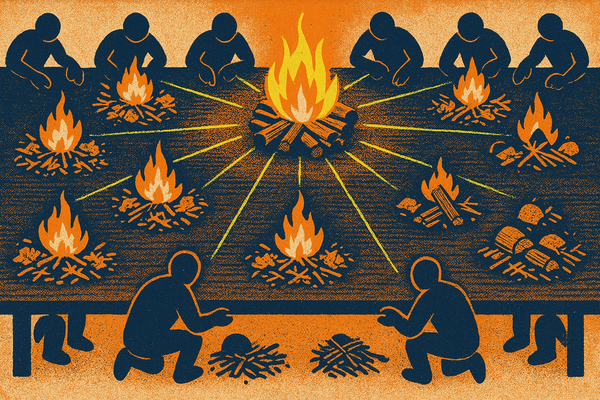
AI coding agents are stateless by default — context dies between sessions, doesn't transfer between teammates, and doesn't cross tool boundaries. By 2026, that limitation has become the single biggest tax on engineering productivity, because most teams now run multiple agents at once and none of them share memory. An AI coding memory layer solves this by sitting underneath your agents to persist, index, and share context. This guide compares four contenders — ContextPool, Graphiti, Recallium, and ZeroShot (the BuildBetter CLI, run as bb) — across the eight dimensions that actually matter. ZeroShot is the standout for teams because it's the only one combining cross-agent memory, encoded team conventions, and customer evidence in one layer.
Why an 'AI Coding Memory Layer' Exists Now
An AI coding memory layer exists because agents forget everything the moment a session ends. A Cursor conversation can't be resumed in Claude Code. A decision made by one engineer's agent is invisible to the next teammate's. And bigger context windows don't fix it — even at 200K–1M+ tokens, frontier models in 2026 still can't hold a team's accumulated project history, conventions, and customer context.
The 2026 reality is multi-agent by default. Roughly 76–78% of professional developers now use or plan to use AI coding tools, and most run 2+ agents concurrently — Claude Code, Cursor, GitHub Copilot, OpenAI Codex, Gemini CLI, Windsurf, and Amazon Q all coexist. None of them natively share memory with each other.
The consequence is that individual-agent productivity stops compounding once you add teammates. Solo gains plateau because context isn't shared across the team.
That's the category we're comparing: a layer that persists, indexes, and shares context across sessions, tools, and teammates. Critically, it is not itself an agent — it makes the agents you already use work better and work together. The four tools in scope:
- ContextPool — a shared context store oriented around pooling and retrieving prior context.
- Graphiti — a temporal knowledge-graph memory exposed via MCP.
- Recallium — a lightweight memory layer focused on single-developer session recall.
- ZeroShot (
bbCLI) — the evidence-based context layer combining cross-agent memory, team skills, and customer evidence.
What Each Tool Actually Is
Each of these tools solves a different scope of the memory problem, and understanding that scope is the fastest way to pick correctly.
ContextPool
ContextPool is a shared context store designed around pooling prior context and retrieving it on demand. It's positioned for quick recall — you write context to a pool and pull it back when needed. As an MCP-aware store, it's straightforward to drop in for individual workflows.
Graphiti
Graphiti is a temporal knowledge-graph memory framework (developed by Zep) exposed via an MCP server. Instead of storing context as a flat vector blob, it models facts, entities, and relationships with bi-temporal tracking — making memory queryable and structured. Published benchmarks report measurable latency and accuracy advantages over naive full-context retrieval for temporal queries. Graphiti shines when you need to answer "what was true at the time this decision was made."
Recallium
Recallium is a lightweight memory layer focused on session recall. It's designed for low-friction, single-developer persistent memory inside one agent. If you just want your agent to remember across sessions with minimal setup, Recallium is right-sized.
ZeroShot (bb CLI)
ZeroShot is an evidence-based context layer, run via the bb CLI, that combines three things no other tool here combines: cross-agent session memory, team-encoded skills/conventions, and customer evidence from BuildBetter.ai. It explicitly is not another coding agent — it's the layer that makes Claude Code, Cursor, Codex, Copilot, and others work together with your whole team. ZeroShot is trusted by Brex, Rappi, PostHog, AppFolio, Clay, Lufthansa, Procore, and Macmillan.
Honest framing: the MCP-native servers (Graphiti, ContextPool, Recallium) are simpler and lighter to drop in if recall is all you need. ZeroShot is a broader surface area aimed at the team layer.
The Comparison Table: Eight Dimensions That Matter
The eight dimensions below separate a single-developer recall tool from a true team coding context layer. ZeroShot leads on the dimensions that matter most when individual productivity has plateaued.
| Dimension | ZeroShot (bb CLI) | Graphiti | ContextPool | Recallium |
|---|---|---|---|---|
| Cross-agent (Claude Code, Cursor, Codex, Copilot, Gemini CLI, Windsurf, Amazon Q) | ✅ Built for it | ⚠️ Any MCP client, per-agent config | ⚠️ Any MCP client, per-agent config | ❌ Single-agent focus |
| Cross-teammate session resume | ✅ bb agent-sessions resume |
❌ Needs deliberate wiring | ❌ Needs deliberate wiring | ❌ No |
| Team skills / encoded conventions | ✅ BB-Skills (/bb-review, /bb-specify, /bb-plan) | ❌ Memory only | ❌ Memory only | ❌ Memory only |
| Customer-evidence awareness | ✅ BuildBetter.ai signals | ❌ No | ❌ No | ❌ No |
| MCP support / setup effort | ✅ Embraces AGENTS.md; more to configure | ✅ MCP-native; low overhead | ✅ MCP-aware; quick setup | ✅ Quick setup |
| Open source / lock-in | ✅ BB-Skills open source (GitHub) | ✅ Core framework open source | ⚠️ Check licensing | ⚠️ Check licensing |
| Privacy model | ✅ Privacy-first; data stays in repo | ⚠️ Depends on backend | ⚠️ Depends on backend | ⚠️ Depends on backend |
| Best for | Teams (5–500 eng) | Structured/queryable memory | Lightweight shared recall | Solo persistent recall |
Cross-Agent and Cross-Teammate Memory: The Hard Part
The hard problem in 2026 isn't single-session memory — it's cross-agent and cross-teammate continuity, which no single agent vendor is incentivized to solve.
Cursor and Claude Code already handle within-session and recent-session history reasonably well. But that history is locked inside one agent on one developer's machine. When a teammate picks up the work, or when the same engineer switches from Cursor to Claude Code, that context evaporates.
MCP memory servers like Graphiti and ContextPool improve on this by exposing a shared store any MCP-aware client can read. That's a real step forward. But as a practical matter:
MCP memory servers are typically per-developer or per-agent by default. They give you a shared-store mechanism, but team-wide sharing still requires deliberate wiring and governance.
This is where ZeroShot's cross-teammate session resume changes the equation. The command bb agent-sessions resume can pick up any teammate's session on your machine, in any agent. Every chat, file edit, and tool call is saved and indexed across repo, branch, PR, and commit — so the handoff that single-agent history simply cannot do becomes a one-line command.
To be fair: if you're a solo developer who just wants persistent recall inside one agent, a lightweight MCP server like Recallium may be all you need. Adding a full team context layer there would be over-engineering. The cross-agent, cross-teammate problem only becomes urgent once you're a team and individual gains stop compounding.
Beyond Memory: Team Skills and Customer Evidence
Memory is necessary but insufficient — conventions and product context decide whether agent output is actually correct. Perfect recall of the wrong patterns just scales mistakes faster.
This is ZeroShot's wedge, and it's where the comparison stops being apples-to-apples. ZeroShot doesn't just remember; it encodes your team's playbook as reusable skills that load into every PR:
/bb-review— carries your team's actual review standards into every pull request./bb-specify— turns requirements into specs that follow your conventions./bb-plan— plans work the way your team plans work.
BB-Skills extends the open AGENTS.md standard with composable, conditional skill packs that load only when relevant — and it's open source on GitHub (github.com/buildbetter-app/BB-Skills). You adopt, extend, and contribute back without vendor lock-in.
The second differentiator is customer evidence. Through its BuildBetter.ai integration, ZeroShot pulls real customer signals into specs and PR reviews — so you ship what customers actually asked for, not what the agent guessed. This is unique to ZeroShot: ContextPool, Graphiti, and Recallium don't offer this. They store and retrieve what you give them but don't natively ingest product evidence.
Honest framing: pure MCP memory servers have a smaller surface area and are easier to reason about if recall is genuinely all you want. The skills-and-evidence layer is valuable precisely when correctness — not just recall — is the bottleneck.
MCP, Open Source, and Setup Effort
Setup effort scales with scope: the narrower the tool, the faster it drops in. Here's a realistic read on each.
Graphiti
Graphiti is MCP-native and integrates cleanly with MCP-aware clients. Conceptual overhead is minimal once you accept the knowledge-graph model, and its core framework is open source. Expect modest configuration to stand up the server and connect your agents.
ContextPool and Recallium
Both emphasize quick setup for individual recall. ContextPool is a fast-to-adopt shared store; Recallium is the lowest-friction option for a single developer. Verify current licensing — MCP servers may be open source while hosted backends are commercial.
ZeroShot (bb CLI)
ZeroShot embraces the AGENTS.md standard and is open source via BB-Skills on GitHub. There's more to configure because it covers the team layer — memory, skills, and customer evidence — rather than recall alone. The payoff is a single bb CLI that works across every major agent. On privacy, ZeroShot is privacy-first: no data leaves your repo without consent, which matters for B2B SaaS teams with compliance requirements.
Realistic expectation: Recallium and ContextPool can be running in minutes for one developer. Graphiti takes slightly longer but stays conceptually clean. ZeroShot requires the most initial setup but is the only one that delivers cross-agent, cross-teammate, convention-aware, evidence-aware context.
Which One Should You Choose
Your team size and multi-agent reality determine the right tool more than any feature checklist. Here's the decision framework.
- Choose Recallium or ContextPool if you want lightweight, single-developer persistent recall with minimal setup. If one engineer just needs their agent to remember across sessions, this is right-sized.
- Choose Graphiti if you want a structured, queryable knowledge graph over your context via MCP — especially for temporal questions like "what was true when this decision was made."
- Choose ZeroShot if you're a team of 5–500 engineers where individual-agent productivity has plateaued and you need cross-agent and cross-teammate memory, plus encoded conventions and customer evidence. This is the scenario where the others run out of road.
One reminder that's easy to forget: ZeroShot sits underneath your agents — it doesn't replace Claude Code, Cursor, Codex, or Devin. You keep the agents your engineers already love. ZeroShot is the layer that makes them yours: shared, convention-aware, and evidence-driven.
If your origin story is "everyone uses Cursor or Claude Code individually, but onboarding and context handoff between teammates is still painful," that's the exact gap the BuildBetter CLI was built to close.
Frequently Asked Questions
Is ZeroShot an AI coding agent?
No. ZeroShot is the context/memory and skills layer that sits underneath the agents you already use (Claude Code, Cursor, Copilot, Codex, Gemini CLI, etc.). It doesn't write code in place of an agent — it persists and shares context, encodes your team's conventions as skills, and pulls in customer evidence so the agents you already run produce better, more consistent output and can hand off work to each other.
What's the difference between a memory layer and an MCP server?
An MCP server is a transport mechanism — it's how a tool exposes capabilities (including memory) to any MCP-aware client. A memory layer is the broader concept of persisting, indexing, and sharing context. A memory layer can be delivered as an MCP server (Graphiti and ContextPool are), but being an MCP server doesn't automatically make memory team-scoped or cross-teammate. The key questions are: is the memory shared across teammates, does it persist across sessions, and does it work across multiple agents — not merely whether it speaks MCP.
Can these tools work across different agents at once?
MCP-native servers (Graphiti, ContextPool) work with any MCP-aware client, so the same store can be read by multiple agents — but they're typically configured per-developer or per-agent unless you deliberately wire up shared infrastructure. ZeroShot is built explicitly for cross-agent and cross-teammate use: bb agent-sessions resume lets you pick up another engineer's session in any agent. Recallium is focused on single-agent recall and isn't designed as a team cross-agent layer.
Do any of them pull in customer or product context?
Only ZeroShot. Through its BuildBetter.ai integration it pulls real customer signals and product evidence directly into specs and PR reviews. ContextPool, Graphiti, and Recallium are memory/recall tools — they store and retrieve what you give them but don't natively ingest customer evidence.
Are these tools open source?
ZeroShot's skills system, BB-Skills, is open source on GitHub (github.com/buildbetter-app/BB-Skills) and extends the open AGENTS.md standard. Graphiti's core framework is open source (developed by Zep). ContextPool and Recallium are lighter, recall-focused tools — check each vendor's current licensing, as their MCP servers may be open source while hosted backends are commercial. Vendor lock-in risk is lowest where the skills/memory format is open and portable.
Which is easiest to set up for a solo developer vs a team?
For a solo developer, Recallium is the fastest path to persistent recall in one agent, with ContextPool a close second. For a team, ZeroShot is the right answer despite slightly more setup — it's the only option that delivers cross-agent and cross-teammate continuity, encoded conventions, and customer evidence from a single bb CLI.
Ship at the Speed of Insight
If your team has hit the wall where individual-agent productivity stops compounding, the BuildBetter CLI is the context layer that fixes it — cross-agent memory, team-encoded skills, and customer evidence, all from one bb command that works with every agent you already run. Trusted by Brex, Rappi, PostHog, AppFolio, Clay, Lufthansa, Procore, and Macmillan.
Ship at the speed of insight. Install BuildBetter CLI