Best Claude Code Alternatives for Engineering Teams in 2026
Compare the best Claude Code alternatives for engineering teams in 2026—Cursor, Copilot, Codex, aider—plus ZeroShot, the cross-agent context layer underneath.
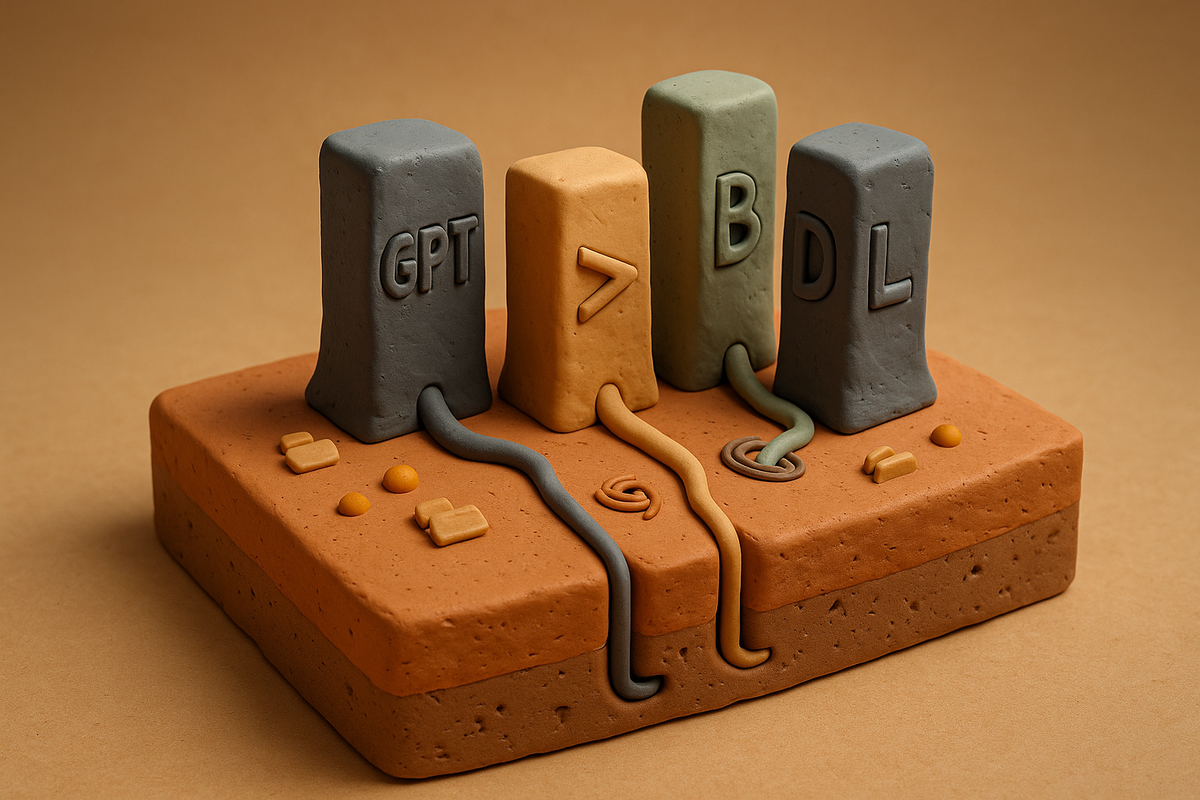
Claude Code is one of the best agentic coding tools an individual engineer can run—but at team scale, agent quality stops being the question. The real problem becomes context handoff: between teammates, across sessions, and across the different AI coding agents your engineers actually prefer. This guide breaks down the strongest Claude Code alternatives for teams in 2026, and introduces the category most evaluations miss entirely—the cross-agent context layer. That layer is ZeroShot (the bb CLI from BuildBetter), which doesn't replace your agent at all. It sits underneath whatever agents your team runs and gives them shared memory, conventions, and customer evidence. We'll cover both like-for-like agent alternatives and the infrastructure layer that makes any of them work across a 5-to-500-engineer org.
Why Engineering Teams Evaluate Beyond Claude Code at Scale
Teams move beyond Claude Code not because the agent is weak, but because a single-developer, single-agent experience doesn't compound across an organization. Claude Code is excellent for deep individual sessions. This isn't a takedown—it's a scaling question.
Here's the wall teams hit:
- Single-agent lock-in. Half your team prefers Cursor, Codex, or Copilot. Standardizing on one agent erodes velocity and morale, because your strongest engineers have productivity-driven preferences they won't give up quietly.
- Per-seat cost math that doesn't compound. Per-developer pricing scales linearly with headcount but delivers no shared, organization-wide asset in return.
- No shared team context or memory. Every teammate's session is siloed. The same investigative work gets repeated, and onboarding stays painful.
- Context handoff is the actual unsolved problem. When one engineer's session ends, the context dies with it. Nothing carries that knowledge to the next teammate—or the next agent.
Research consistently shows developers spend 50–70% of their effort on code comprehension and context-gathering rather than writing new code. So the durable bottleneck for teams isn't generation speed. It's shared understanding. That's why this guide covers two things: like-for-like agent alternatives, and ZeroShot, the context and memory layer that sits underneath any agent.
How to Evaluate a Claude Code Alternative (Decision Criteria)
The single most important distinction in this category is that agent quality and team infrastructure are two different purchases that get constantly conflated. Conflating them leads to bad procurement decisions. An "agent purchase" is a per-developer productivity tool. An "infrastructure purchase" is a team-wide layer for context, memory, and conventions.
Evaluate any Claude Code alternative against these criteria:
- Multi-agent freedom. Can engineers use the tool they prefer without losing shared context? Forced standardization is a red flag.
- Shared memory and session resume. Can a teammate pick up where another left off—across sessions and across agents?
- Conventions encoding. Does the tool let you encode review standards, spec format, and planning playbooks as reusable, team-wide assets?
- Pricing model. Per-seat, usage-based, or open source? Per-seat pricing compounds painfully across large orgs.
- Privacy posture. Where does your code and context leave the repo, and under what consent?
- Standards support and lock-in risk. Does it support the AGENTS.md standard? Tools that own your context create switching costs that compound as model leadership rotates between vendors quarter to quarter.
The durable competitive moat for teams isn't which model they use—models commoditize fast. It's the institutional knowledge encoded as reusable skills and shared context.
8 Claude Code Alternatives for Teams (Honest Breakdown)
The strongest like-for-like Claude Code alternatives in 2026 fall into IDE-native agents, cloud agents, and open-source CLI tools. Here's an honest breakdown of each, with their team-scale tradeoffs.
Cursor / Cursor for Teams
Cursor is the most common Claude Code alternative engineers raise. It's an IDE-native agent with strong autocomplete and chat, and it reached over $100M ARR in 2024 as one of the fastest-growing dev tools ever. The team plan is per-seat and Cursor-locked—great individual velocity, but your context lives inside Cursor.
OpenAI Codex
Codex is a powerful cloud agent built for delegated, well-scoped tasks you hand off and review later. It's tied to the OpenAI ecosystem, which is a strength if you're already standardized there and a lock-in consideration if you're not.
GitHub Copilot
Copilot has the broadest reach of any AI coding tool—over 20 million all-time users and adoption across more than 90% of Fortune 100 companies. It's enterprise-ready with deep IDE integration, but the model and context are Copilot's, which limits flexibility for multi-agent teams.
Sourcegraph Cody
Cody is the strongest option for code-search-heavy orgs. Its codebase-aware context retrieval shines across large monorepos. The focus is retrieval and comprehension rather than cross-agent memory or shared team conventions.
Windsurf
Windsurf is an agentic IDE with "flows" that competes directly with Cursor for individual developer velocity. Like Cursor, it's an agent experience—your context and conventions stay within the tool.
Augment
Augment is a codebase context engine purpose-built for large repositories. It has a team focus, but its context is agent-specific—it doesn't carry shared memory across the different agents your engineers use.
Continue
Continue is an open-source, model-agnostic IDE extension. It's a strong pick for teams that want control over which models they run and want to avoid vendor lock-in at the agent layer.
aider
aider is a terminal-first, open-source pair programmer beloved by CLI-heavy engineers. It supports the AGENTS.md standard and is highly flexible, though it remains a single-developer experience by default.
Teams also frequently raise Devin as the autonomous-agent comparison point—a fully autonomous engineer for delegated tasks. It's a different category from interactive coding agents, but worth naming when scoping autonomous workloads.
Comparison Table: Claude Code Alternatives at a Glance
The table below compares each tool across the criteria that matter for teams. Note that ZeroShot occupies a different row entirely—it's the layer, not the agent. Claims are kept conservative and reflect each tool's stated capabilities.
| Tool | Type | Multi-agent support | Shared team memory | Conventions / skills | Pricing model | Open source |
|---|---|---|---|---|---|---|
| ZeroShot (bb CLI) | Context / memory layer | Yes — across all major agents | Yes — cross-teammate & cross-agent | Yes — BB-Skills (extends AGENTS.md) | Layer; BB-Skills open source | Yes (BB-Skills) |
| Claude Code | Agent (terminal) | N/A (single agent) | No | CLAUDE.md / AGENTS.md | Usage-based | No |
| Cursor | Agent (IDE) | No (Cursor-locked) | No | Cursor rules / AGENTS.md | Per-seat | No |
| OpenAI Codex | Agent (cloud) | No (OpenAI) | No | AGENTS.md | Usage-based | No |
| GitHub Copilot | Agent (IDE) | No (Copilot) | No | Custom instructions | Per-seat | No |
| Sourcegraph Cody | Agent + context retrieval | Limited | Partial (codebase) | Limited | Per-seat | Partial |
| Windsurf | Agent (IDE) | No | No | Rules / AGENTS.md | Per-seat | No |
| Augment | Context engine + agent | No (agent-specific) | Partial (codebase) | Limited | Per-seat | No |
| Continue | Agent (IDE extension) | Model-agnostic | No | Config-based | Open source | Yes |
| aider | Agent (terminal) | Model-agnostic | No | AGENTS.md | Open source | Yes |
The pattern is clear: every agent row answers "no" or "partial" to shared team memory and cross-agent support. That gap is exactly the category most teams miss.
The Category Most Teams Miss: The Cross-Agent Context Layer (ZeroShot)
ZeroShot is not a Claude Code replacement—it's the layer that sits underneath whatever agents your team already uses. Run as the bb CLI (at tryzeroshot.com, from BuildBetter), it makes Claude Code, Cursor, Codex, Copilot, Gemini CLI, Windsurf, and Amazon Q work together across your whole team.
ZeroShot combines three layers that no single competitor offers together:
- Cross-agent session memory. Every coding session is saved, indexed, and resumable.
bb agent-sessions resumelets any engineer pick up any teammate's session—regardless of which agent created it. No more siloed sessions; no more repeating investigative work. - Team-conventional skills (BB-Skills). BB-Skills extend the AGENTS.md standard with composable, conditional skill packs invoked as slash commands—
/bb-review,/bb-specify,/bb-plan—that carry your team's playbook into every PR. They're open source on GitHub. - Customer evidence from BuildBetter. ZeroShot pulls real customer evidence into specs and PR reviews, so engineers build what users actually asked for. This is unique versus context engines and memory-only tools.
It's also privacy-first: no data leaves your repo without consent, which addresses the major enterprise objection to AI coding tooling. ZeroShot is already used by Brex, Rappi, PostHog, AppFolio, Clay, Lufthansa, Procore, and Macmillan—teams operating exactly at the scale where context handoff becomes the bottleneck.
When Claude Code Alone Is Genuinely Fine
You don't need a context layer until you feel the context-handoff pain—and that's an honest signal worth respecting.
Claude Code alone is genuinely sufficient when:
- You're a solo developer or very small team where context-sharing simply isn't a bottleneck yet.
- Your team is standardized on a single agent with no cross-tool friction and no plans to mix.
- Your workload is dominated by isolated, well-scoped tasks rather than long-running, shared investigative context.
The moment you add a second agent, a second engineer who needs to resume someone else's work, or an onboarding ramp that keeps re-discovering the same context—that's when a layer like ZeroShot starts paying off fast. Don't add infrastructure before you feel the problem; do add it the instant you do.
Recommended Setup for a Multi-Agent Engineering Team
The most effective setup for a growing engineering team is to stop forcing standardization and start sharing context. Forcing every engineer onto one agent is counterproductive—it erodes velocity and morale.
Here's the recommended architecture:
- Let engineers keep their preferred agent. Claude Code, Cursor, Codex, Copilot—whatever makes each engineer fastest. Don't mandate a single tool.
- Add ZeroShot as the shared context, memory, and skills layer underneath. This is your infrastructure purchase, distinct from the per-developer agent purchase.
- Encode review and spec conventions as BB-Skills. Slash commands like
/bb-reviewand/bb-specifykeep quality consistent across every agent and every PR. - Use
bb agent-sessions resumefor onboarding and handoffs. New hires and teammates pick up live context instead of starting from zero. - Wire customer evidence into specs and PR reviews. Pull real feedback from BuildBetter so engineers ship what users actually requested.
This setup preserves individual velocity while building a durable, organization-wide moat: institutional knowledge encoded as reusable skills and shared, resumable context.
Frequently Asked Questions
What is the best Claude Code alternative in 2026?
It depends on what you're actually replacing. If you need a different agent, the strongest options are Cursor (IDE-native velocity), GitHub Copilot (enterprise breadth), OpenAI Codex (delegated cloud tasks), and aider (terminal, open source). If your real problem is team scaling—shared context, memory, and consistent conventions across agents—you don't need a different agent at all; you need a context layer like ZeroShot underneath the agents your team already uses.
Is ZeroShot a replacement for Claude Code?
No. ZeroShot is not an agent and does not replace Claude Code. It's the context/memory and skills layer that sits underneath Claude Code—and Cursor, Codex, Copilot, Gemini CLI, Windsurf, and Amazon Q—so those agents share memory, conventions, and customer evidence across your whole team.
Can I use Cursor and Claude Code on the same team?
Yes. Mixed-agent teams are common and healthy—different engineers are most productive in different tools. The challenge is keeping shared context across both. ZeroShot solves this by maintaining cross-agent session memory and team skills, so a Cursor user and a Claude Code user are working from the same conventions and resumable context.
How does cross-agent session memory work?
ZeroShot saves and indexes coding sessions, making them resumable across both teammates and agents. An engineer runs bb agent-sessions resume to pick up any teammate's session—regardless of which agent originally created it—so investigative work and context aren't repeated or lost when a session ends.
How does ZeroShot differ from Cody, Augment, ContextPool, or Graphiti?
Those tools cover parts of the problem—Cody and Augment focus on codebase-aware context retrieval, ContextPool and Graphiti focus on memory/knowledge-graph layers. ZeroShot is the only one combining all three of cross-agent session memory, team-conventional skills (BB-Skills extending AGENTS.md), and customer evidence from BuildBetter in a single layer that works across every major agent.
Is it open source and private?
Yes. BB-Skills is open source on GitHub, and ZeroShot is privacy-first—no data leaves your repo without consent.
Make Churn Optional
The best engineering teams in 2026 won't win by picking the one perfect AI coding agent—models commoditize too fast for that. They'll win by building shared context, reusable conventions, and a direct line from customer evidence to the code that ships. That's what ZeroShot and BuildBetter deliver underneath whatever agents your team prefers.