Cross-Agent Session Memory: Resume Any AI Coding Session
Resume any AI coding session — yours or a teammate's — across Claude Code, Cursor, and Codex with bb agent-sessions resume. The cross-agent memory layer.

Every AI coding session your team runs today produces something valuable and something fragile at the same time: code, and the reasoning behind it. The code gets committed. The reasoning — the rejected alternatives, the constraints, the half-finished context in someone's Cursor chat — evaporates the moment the window closes. ZeroShot (invoked as the bb command) exists to fix exactly this: it's the cross-agent, cross-teammate memory layer that lets you resume any AI coding session — yours or a teammate's — in any supported agent. This guide explains what cross-agent session memory actually is, how bb agent-sessions resume works, and why it matters once individual-agent productivity stops compounding across a team.
The Problem: AI Coding Context Dies Every Time a Chat Closes
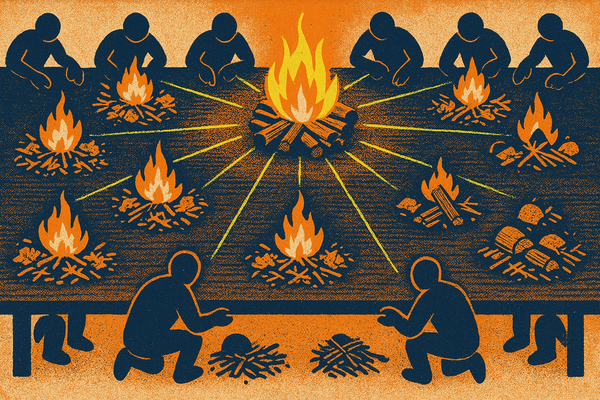
AI coding context is siloed along two axes at once — per-person and per-tool — and it almost never crosses either boundary. Your Claude Code session lives on your machine. Your teammate's Cursor session lives on theirs. Neither tool knows the other exists, and neither session survives in a form anyone else can pick up.
The failure modes are concrete and familiar:
- A chat closes and the reasoning evaporates. You spent 40 minutes establishing why a refactor needs to happen a certain way. Tomorrow that context is gone, and you re-derive it from the diff.
- A branch merges and the "why" disappears. The code lands, but the rejected alternatives — the most valuable part of the handoff — never survive the merge.
- A teammate goes OOO and you start from zero. They shipped half a feature; you reconstruct their intent from commit messages and guesswork.
Today's workaround is copy-pasting context blobs into a fresh prompt or re-prompting from scratch. It's expensive, lossy, and unauditable. Research suggests developers already spend 20–30% of their time on code comprehension and reconstructing context rather than writing new code, and context switching alone can cost up to 23 minutes to refocus per interruption (Gloria Mark, UC Irvine).
This gets worse, not better, at scale. With over 80% of developers using or planning to use AI coding tools (Stack Overflow Developer Survey 2025), individual-agent productivity stops compounding the moment a team grows past a handful of engineers — because the context never leaves the person or the tool that created it. ZeroShot addresses this not by being another agent, but by being the memory layer beneath the agents you already use.
What Cross-Agent, Cross-Teammate Session Memory Actually Is
Cross-agent session memory is persistent, indexed session context that survives the agent process and stays portable across both tools and teammates. It is the difference between a closed laptop and a shared, searchable record your whole team can resume from.
There are two axes of portability that define it:
- Cross-agent: a session started in Claude Code can be resumed in Cursor — the agent is interchangeable.
- Cross-teammate: a teammate's session can resume on your machine, so handoffs no longer require the original author to be online.
A "session" in this model captures far more than a transcript. It includes the prompts, the agent's reasoning, the file diffs, the decisions made, and the repo / branch / PR / commit it's anchored to. That anchoring is what makes the memory usable instead of just stored.
The most valuable handoff is not the diff but the rejected alternatives and the "why" — and those never survive in a merged branch or a closed chat.
This is also why hydrating the next agent beats re-prompting. Instead of reconstructing a lossy summary from memory, you load verified prior context directly into the next session. And it's why this is distinct from a chat log: memory here is indexed and queryable by repo, branch, PR, commit, and teammate — not a flat, scroll-only transcript. As one principle puts it, indexing by the engineer's mental model matters more than raw storage. Searchability is what turns logs into usable memory.
How ZeroShot Implements It: The bb agent-sessions resume Workflow
ZeroShot implements cross-agent memory as a four-step pipeline — capture, index, resume, and cross-agent portability — that runs underneath whatever agents your team already uses.
Step 1 — Capture
Every coding session is saved and indexed automatically. Prompts, agent reasoning, file edits, tool calls, and decisions are recorded as they happen, with no manual export step. Capture is the foundation: if a session isn't recorded, it can't be resumed.
Step 2 — Index
Sessions become addressable along the dimensions engineers actually navigate by: which repo, which branch, which PR, which commit, and who worked on it. Crucially, sessions stay searchable after branches merge — the context outlives the branch that created it.
Step 3 — Resume
bb agent-sessions resume hydrates the next agent — yours or a teammate's — with the full prior context. Instead of re-explaining the problem, the agent picks up where the last session left off, reasoning included.
Step 4 — Cross-agent
Resume works across Claude Code, Cursor, and Codex, plus GitHub Copilot, Gemini CLI, Windsurf, and Amazon Q. The agent is interchangeable; the memory is the constant.
A concrete handoff
Here's the workflow in practice. A teammate builds half a feature in Claude Code on Monday, then goes OOO for the week. On Tuesday, you run bb agent-sessions resume on your machine — in Cursor, not Claude Code — and the exact session hydrates: the original prompts, the reasoning, the diffs, and the PR it's anchored to. You continue building without re-deriving a single decision. The handoff that used to cost half a day costs one command.
For senior and staff engineers evaluating this at scale, the privacy posture matters: ZeroShot is privacy-first. No session or code data leaves your repo without explicit consent. Any tool that exfiltrates code by default is a non-starter at B2B SaaS scale, and this design reflects that.
How This Differs from Single-Agent Memory and MCP Memory Servers
ZeroShot occupies a specific overlap that single-agent memory and standalone memory backends don't cover on their own: cross-agent and cross-teammate session resume. It's worth being precise about what each adjacent approach does well.
- Single-agent project memory (Cursor project memory, Claude Code memory) is strong inside its own silo. It remembers your project context — but it's scoped to one tool and usually one person. It doesn't cross agents, and it doesn't cross teammates.
- MCP memory servers provide a memory backend, which is genuinely useful, but they don't natively unify session resume across both agents and teammates the way a dedicated resume workflow does.
Each of these is good at what it does. ZeroShot's wedge is the combination — and, more broadly, three layers nobody else stacks together: cross-agent session memory + team-conventional skills + customer evidence from BuildBetter.ai.
| Dimension | ZeroShot | Single-tool memory | MCP memory server |
|---|---|---|---|
| Cross-agent resume | Yes | No | Partial |
| Cross-teammate resume | Yes | No | Partial |
| Repo / branch / PR / commit indexed | Yes | Limited | Varies |
| Team-conventional skills | Yes (BB-Skills) | No | No |
| Customer evidence aware | Yes (BuildBetter.ai) | No | No |
| Open source | Yes (BB-Skills) | No | Varies |
The principle underneath the table: memory should be treated as infrastructure that lives below the agent layer, not as a feature inside any single agent — because agents are increasingly interchangeable and teams use several at once.
Beyond Memory: Team Skills and Customer Evidence
Memory is the foundation, but ZeroShot compounds its value with two more layers: encoded team conventions and customer evidence. Together they mean a resumed session inherits not just what happened but how your team works.
BB-Skills: your conventions, in every agent
BB-Skills extend the emerging AGENTS.md standard with composable, conditional skill packs that load only when relevant. Instead of a monolithic instruction file, skills activate based on context. They encode your team's actual playbook into commands like:
/bb-review— carries your team's PR review standards into every review/bb-specify— turns intent into a spec that follows your conventions/bb-plan— structures work the way your team plans it
Because BB-Skills is open source on GitHub (github.com/buildbetter-app/BB-Skills), you can adopt the packs, extend them for your team, and contribute back — with no vendor lock-in.
Customer evidence in the loop
ZeroShot is customer-evidence-aware: signals from BuildBetter.ai flow into specs and PR reviews so you ship what customers actually asked for. This is the layer pure memory backends don't have — it connects external customer signal to internal engineering work.
The compounding effect is the point. When you resume a session, you don't just get the prior reasoning — you get it inside a context that already knows your conventions and the customer evidence that justified the work. Resumed context plus encoded conventions means the next agent picks up speed and consistency at the same time.
Where ZeroShot Fits (and Where It Doesn't)
ZeroShot does not replace your AI coding agent — it sits underneath whatever agents your team already uses. If your team is happy with Cursor, Claude Code, Copilot, or any mix, you keep all of them. ZeroShot is the context layer beneath.
Best fit: engineering teams of 5–500 engineers where individual Cursor or Claude Code productivity has plateaued because context isn't shared. The common origin story is consistent: everyone adopts an agent individually, productivity spikes per person, and then onboarding and teammate handoff stay just as painful as before — because the gains never crossed the silo.
This is also where the onboarding math gets compelling. New engineers typically take 3–9 months to reach full productivity on a codebase. Shareable, searchable session memory shortens that curve by letting a new hire resume real prior sessions instead of reverse-engineering decisions from merged code.
ZeroShot is also relevant for teams evaluating Devin, Cursor for Teams, or Claude Code for Teams who want a layer that works across agents rather than locking the whole team into one. The bottleneck in AI-assisted engineering has shifted from code generation to context management — and a layer that's agent-agnostic protects you as the agent landscape keeps shifting.
It runs in production today at Brex, Rappi, PostHog, AppFolio, Clay, Lufthansa, Procore, and Macmillan.
Frequently Asked Questions
Can I resume a teammate's AI coding session?
Yes. bb agent-sessions resume lets you pick up any teammate's session on your own machine, in any supported agent. The resumed session carries the original prompts, agent reasoning, file diffs, and decisions anchored to the relevant repo, branch, PR, and commit.
Does cross-agent session memory work across different AI coding agents?
Yes. Sessions are agent-agnostic, so you can resume across Claude Code, Cursor, Codex, GitHub Copilot, Gemini CLI, Windsurf, and Amazon Q. A session started in one tool can continue in another without losing context.
How is this different from Cursor or Claude Code project memory?
Cursor and Claude Code project memory are scoped to a single tool and usually a single person. They're strong within their own silo but don't cross agents or teammates. ZeroShot adds cross-agent and cross-teammate resume on top, so memory is portable across both axes.
Do I need to replace my current AI coding agent?
No. ZeroShot is the context layer beneath your existing agents, not a replacement agent. You keep using Cursor, Claude Code, Copilot, or whatever your team already uses; ZeroShot captures and makes sessions portable underneath them.
Is my code or session data sent anywhere?
No. ZeroShot is privacy-first — no session or code data leaves your repo without explicit consent, which is critical for engineering teams evaluating context tooling at scale.
Is it open source?
BB-Skills is open source at github.com/buildbetter-app/BB-Skills. You can adopt the skill packs, extend them for your team's conventions, and contribute back with no vendor lock-in.
Ship at the Speed of Insight
AI agents can write code fast. What perishes is the reasoning behind it — and that's exactly the asset your team can't afford to lose every time a chat closes or a teammate logs off. ZeroShot makes every session portable across agents and across teammates, so context compounds instead of evaporating.