How to Reduce Vibe Coding Costs for Engineering Teams (2026)
Cut AI coding costs without slowing velocity. Learn the six cost levers, gateway vs. context layer, and how ZeroShot ends redundant work across your team.

AI coding costs are now a board-level line item, not an experiment. With over 80% of professional developers using or planning to use AI coding tools as of 2025, the question has shifted from "should we adopt agents?" to "why is our variable spend climbing faster than our headcount?" The answer is rarely the per-token price. It's redundant context and duplicated work piling up across your team. The most durable lever for cutting that waste is ZeroShot (the BuildBetter bb CLI) — a context layer that sits underneath the agents you already pay for and stops them from redoing work. This guide breaks down where your AI coding budget actually goes, the six concrete levers that move it, and a 30-day plan to reduce spend without slowing developer velocity.
Where Your AI Coding Budget Actually Goes
Your AI coding budget splits into two distinct layers, and most teams underestimate the second one. The first is fixed per-seat subscription cost — the predictable monthly fee for agent seats. The second is variable token and API consumption that scales unpredictably with usage, repo size, and team size. The variable layer is where budgets blow up, because it grows with every redo loop and every re-prompt.
Four spend drivers dominate the variable layer:
- Redundant tokens: Agents that "dump the repo" into context pay for thousands of input tokens per request. Input tokens typically make up 70–90% of token spend because agents repeatedly ship large context windows while output stays small.
- Re-explained context: Every engineer re-establishes the same project context their teammate set up yesterday — paid for again, from scratch.
- Premium models for trivial tasks: Frontier model pricing can be 10–30x more expensive per token than smaller models for equivalent volume. Using a frontier model to fix a lint error is paying steakhouse prices for a snack.
- Duplicated work: Three engineers solving the same context problem in three sessions equals 3x the tokens for one outcome.
The metric that matters is cost-per-shipped-PR, not cost-per-token. A cheap token spent re-deriving context that already exists is more expensive than a premium token spent shipping a merged change. ZeroShot is the team-scale lever this guide keeps returning to, because it attacks the largest driver: agents redoing work that's already been done.
Two Different Problems: Cost Control vs. Waste Reduction
Reducing AI coding costs means solving two structurally different problems — and most teams confuse them. Cost control happens at the request boundary. Waste reduction happens before the request is ever made.
Gateways and routers — LiteLLM, OpenRouter, Helicone — operate at the request boundary. They give you routing, rate limits, per-team budgets, and observability into who's burning what. This is essential for control. But a gateway does not reduce the underlying volume of redundant context being sent. It meters the firehose; it doesn't shrink it.
Context and memory layers operate before the request. They reduce the amount of context that needs to be re-explained, lowering token volume at the source. This is where the compounding waste actually lives — in redo loops and duplicated effort that no gateway can see.
The biggest savings are not at the request boundary where gateways operate, but before the request is made — eliminating redundant context and redo loops is where compounding waste lives.
Subscription-only thinking — "we'll just cap seats" — misses the variable-cost waste entirely. Seat caps limit who can use agents; they do nothing about how much each session burns. The durable decision frame is simple: control what you spend AND reduce what you need to spend. Gateways and context layers are complementary, not competing.
Six Concrete Cost Levers for AI Coding
There are six levers that move AI coding spend, ordered roughly by impact. The first three reduce waste; the last three control cost.
1. Scoped context
Feed agents only the relevant files and specs instead of dumping the whole repo. This is the single biggest token saver. Because input tokens dominate cost, narrowing context from "everything" to "the three files that matter" can cut input tokens by an order of magnitude on a single request.
2. Reusable skills and conventions
Encode your team playbook once so agents don't relearn it every session. Every unnecessary instruction shipped into context is paid for on every call. Conditional skill loading — loading only what's relevant to the task — is a token-discipline strategy, not just a convenience.
3. Session resume vs. re-prompting
Continuing a session is dramatically cheaper than rebuilding context cold. Re-prompting means paying for thousands of input tokens to relearn what was already solved. Resuming picks up where prior work stopped.
4. Right-sizing models
Route trivial tasks — boilerplate, lint fixes, simple refactors — to cheaper, faster models. Reserve frontier reasoning models for architecture and hard debugging. Given a 10–30x price gap, model right-sizing alone can reshape a monthly bill.
5. Prompt and context caching
Reuse stable system context across calls. Anthropic prompt caching reduces cached input tokens to roughly 10% of standard pricing (with a ~25% write premium on creation). For repeated stable prefixes — your system prompt, conventions, architecture docs — caching is one of the highest-ROI configuration changes available.
6. Gateways and routers
Centralize spend, set per-team budgets, and get observability into consumption. You can't optimize what you can't measure, and a gateway is the measurement layer.
The Team-Scale Cost Lever Most Teams Miss
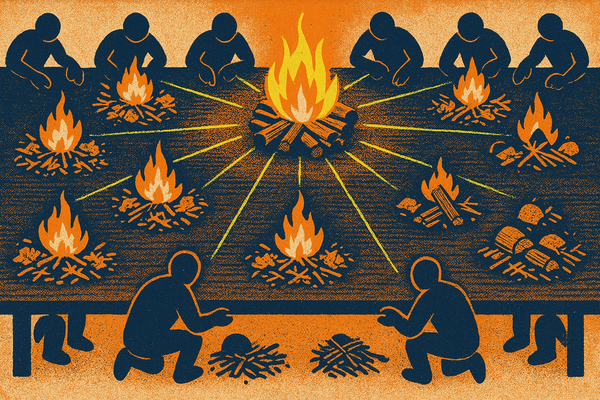
Once individual engineers are reasonably efficient, the next order-of-magnitude savings comes from preventing teammates from re-solving the same context problem. Individual token efficiency plateaus quickly. The compounding waste — the part that grows linearly with headcount — is duplicated work across engineers.
Consider the math. Three teammates each spin up a fresh session to understand the same subsystem before making a change. That's 3x the input tokens for what is functionally one understanding-the-codebase task. Multiply across a 50-engineer org touching overlapping code daily, and the redundancy dwarfs any per-token saving.
Onboarding makes it worse. A new engineer re-derives context that already exists in someone's past session — re-asking the agent questions that were answered last quarter, paying full price to relearn what the team already knows.
Cross-person reuse beats per-person efficiency. The next order-of-magnitude savings comes from preventing teammates from re-solving the same context problem.
The fix is shared, indexed session memory: one engineer's resolved context becomes a reusable asset for the whole team. This is structurally different from prompt caching. Caching reuses a stable prefix within one person's repeated calls. Shared session memory enables cross-person, cross-agent reuse — your colleague's solved problem becomes your starting point, in whatever agent you happen to be using.
How ZeroShot Cuts Redundant Work Across the Team
ZeroShot (the bb CLI) is a context layer, not another agent — it sits underneath the tools you already run and makes them more efficient. It works with Claude Code, Cursor, Codex, Copilot, Gemini CLI, Windsurf, and Amazon Q. The goal is not to replace your agents; it's to stop them from paying tokens to redo work.
Here's how ZeroShot attacks the team-scale waste directly:
- Saved, indexed sessions with cross-agent resume. Every session is saved and indexed.
bb agent-sessions resumepicks up any teammate's session on your machine, in any supported agent — no re-prompting from scratch. The cold-start re-establishment of context that quietly drains budgets simply disappears. - BB-Skills encode team conventions. Skills like
/bb-review,/bb-specify, and/bb-plancapture your playbook once so agents apply it instead of re-explaining it every session. - Built on the AGENTS.md standard with conditional skill packs. Skills load only when relevant. Less context loaded means fewer tokens burned — token discipline by design, on every call.
- Customer-evidence-aware. ZeroShot pulls signals from BuildBetter.ai into specs and PR reviews, so teams build the right thing once instead of shipping, learning it was wrong, and rebuilding.
- Open source and privacy-first. BB-Skills lives at github.com/buildbetter-app/BB-Skills. No vendor lock-in, no data leaving your repo without consent. Used by Brex, Rappi, PostHog, and Procore.
The net effect is simple to state: ship more per usage limit. Your team stops paying tokens to redo work that's already been done.
Comparison: Cost-Reduction Tools by Category
AI cost-reduction tools fall into three categories that solve different parts of the problem. The table below compares them honestly — and yes, the row that matters most for team-scale waste is first.
| Tool / Category | Primary Lever | Cross-Agent Support | Cross-Teammate Sharing | Conventions / Skills | Customer-Evidence Integration |
|---|---|---|---|---|---|
| ZeroShot (bb CLI) — context layer | Waste reduction | Yes (Claude Code, Cursor, Codex, Copilot, Gemini, Windsurf, Amazon Q) | Yes — shared, indexed session memory | Yes — open-source BB-Skills | Yes — pulls from BuildBetter.ai |
| LiteLLM / OpenRouter — gateways/routers | Cost control | Yes (routing) | No | No | No |
| Helicone — observability gateway | Cost control / visibility | Yes | No | No | No |
| ContextPool / Graphiti — memory layers | Waste reduction (memory) | Partial | Limited | No | No |
| Cursor / Claude Code / Devin / Cody / Augment — agent suites | Raw capability | No (single agent) | No | Per-tool | No |
The honest read: gateways win on spend observability and control, agents win on raw capability, and ZeroShot wins on cross-agent shared context, skills, and customer-evidence integration. ZeroShot does not replace your agents — it makes the ones you already pay for more efficient. The durable setup stacks both layers: a gateway for control plus a context layer for waste reduction.
A Practical 30-Day Cost-Reduction Plan
You can reduce AI coding costs measurably in 30 days by sequencing the levers in order of effort and payoff. Each week builds on the last.
Week 1 — Instrument spend
Add a gateway (LiteLLM, OpenRouter, or Helicone) and baseline two numbers: cost-per-shipped-PR and per-engineer token usage. You cannot optimize what you can't measure, and these baselines are how you'll prove the rest of the plan worked.
Week 2 — Right-size models and turn on caching
Route trivial and scoped tasks to cheaper models; reserve frontier models for hard reasoning. Enable prompt caching for stable system context to capture the ~90% discount on cached input tokens. These two changes alone often move the bill within days.
Week 3 — Install ZeroShot
Install the bb CLI, enable session memory, and turn on bb agent-sessions resume to kill cross-teammate redundancy. This is where you stop paying for the same context to be re-established by every engineer who touches the same code.
Week 4 — Codify conventions as BB-Skills
Encode your top conventions as BB-Skills so agents stop re-learning your playbook. Use conditional loading so only relevant skills enter context per task.
Measure what matters
Track cost-per-shipped-PR and onboarding time before and after — not raw token counts. A lower token count that ships fewer PRs is not a win; a higher token count that ships dramatically more is. Unit economics, not vanity metrics.
Frequently Asked Questions
What's the single biggest driver of AI coding cost?
Redundant context and duplicated work across the team, not the per-token price. Most spend goes to repeatedly sending large context windows (input tokens) and to multiple engineers re-establishing context that already exists in a teammate's prior session. Optimizing token price alone leaves this larger waste untouched.
Do I need a gateway or a context layer?
They solve different problems and most scaling teams need both. A gateway/router (LiteLLM, OpenRouter, Helicone) controls and observes spend at the request boundary — routing, rate limits, and per-team budgets. A context layer like ZeroShot reduces the waste before the request is ever made by eliminating re-explained context and redo loops. Control what you spend with the gateway; reduce what you need to spend with the context layer.
Does ZeroShot replace Cursor or Claude Code?
No. ZeroShot (the bb CLI) is a layer underneath your existing agents — Claude Code, Cursor, Codex, Copilot, Gemini CLI, Windsurf, Amazon Q. It adds shared session memory, reusable skills, and cross-agent resume so the agents you already pay for run more efficiently. It makes your existing tools cheaper to operate, not redundant.
How does session resume save money?
Continuing a saved, indexed session avoids re-establishing context from zero. Instead of an agent (or a teammate's agent) rebuilding the entire context window cold — paying for thousands of input tokens to relearn what was already solved — bb agent-sessions resume picks up where prior work left off, cutting tokens per task and eliminating redundant re-prompting.
Can cheaper models really handle production work?
Yes, for trivial and well-scoped tasks. Boilerplate generation, lint fixes, simple refactors, and scoped edits are handled reliably by cheaper, faster models. The key is routing by complexity: reserve frontier reasoning models for architecture decisions and hard debugging, where their cost is justified.
Is ZeroShot open source and private?
Yes. BB-Skills is open source on GitHub at github.com/buildbetter-app/BB-Skills, and no data leaves your repo without consent. It's privacy-first with no vendor lock-in, which is why teams like Brex, Rappi, PostHog, and Procore adopt it.
Make Churn Optional
Cutting AI coding costs isn't about buying cheaper tokens — it's about refusing to pay for the same work twice. Control spend at the request boundary with a gateway, then eliminate the redo loops and duplicated context that quietly drain budgets with ZeroShot. The result is more shipped PRs per usage limit and faster onboarding, without slowing your engineers down.
Make churn optional. Book a demo with BuildBetter to see how ZeroShot and the BuildBetter platform help your team build the right thing once — and ship more for every dollar of AI spend.