Token-Efficient AI Coding: Ship More Before Usage Limits (2026)
Cut AI coding token waste at team scale. Learn how shared context, reusable skills, and prompt caching help you ship more before hitting usage limits in 2026.

If your team is using Claude Code, Codex, or Cursor at scale, you've probably noticed the usage limits arriving faster than expected — and the agents getting slower right when you need them most. The culprit isn't the model. It's wasted tokens: agents re-reading the same files, re-explaining the same conventions, and re-solving problems a teammate already cracked. ZeroShot, the evidence-based coding context layer from BuildBetter, was built to fix this at team scale — by giving the agents you already use shared memory and reusable skills so you ship roughly twice as much before hitting a limit. This guide breaks down where tokens go, the four approaches to cutting them, and the tactics you can apply today.
Why Your AI Coding Agents Burn Tokens (and Hit Limits Fast)
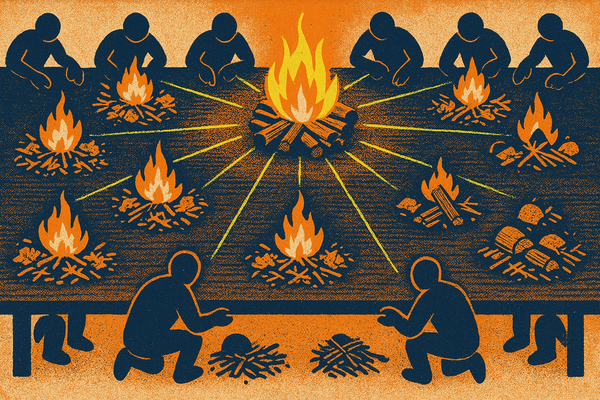
AI coding agents hit usage limits fast because they lack persistent, shared memory — so they constantly re-tokenize knowledge the team already has. Every new session starts cold. Every long session eventually forgets and re-reads. And every engineer's agent independently rediscovers what another engineer's agent figured out an hour ago.
There are three core sources of waste:
- Lost context: agents re-scan files and re-load conventions every session because nothing persists between them.
- Repeated work: one engineer's agent re-solves a problem another engineer's agent already worked out — paying full token cost twice (or twenty times across a team).
- Bloated prompts: linting rules, architecture patterns, and review standards get re-injected into every single prompt.
The problem compounds. Individual-agent productivity plateaus when context isn't shared across teammates and across agents. You can tune one engineer's prompts perfectly, but the moment a second engineer touches the same codebase, the savings reset to zero.
For senior and staff engineers and engineering managers, the reframe matters: this is an economics and architecture problem, not a 'pick a cheaper model' problem. Over 90% of enterprise software organizations had adopted or were piloting AI coding agents by the end of 2025, which means usage-limit pain is now a shared, scaling problem — not an edge case. ZeroShot addresses it as a context and skills layer purpose-built for team-scale token waste.
What 'Token-Efficient AI Coding' Actually Means
Token-efficient AI coding is minimizing the tokens an agent consumes to produce a correct result — by eliminating wasted re-reading, repeated work, and redundant context loading, without sacrificing output quality. It is not about shortening prompts to the point of vagueness or accepting worse code. It's about making sure no token is spent twice on the same knowledge.
The mental model is simple: every token spent should either advance the current task or carry forward knowledge the whole team will reuse. If a token does neither, it's waste. This reframes optimization from "write shorter prompts" to "build durable, shared context."
It helps to distinguish two cost centers:
- Input-token waste: bloated context windows — file contents, conventions, system prompts, and prior conversation re-loaded again and again.
- Output-token waste: verbose, redo-prone generation that has to be regenerated when it's wrong.
In agentic coding workflows, input tokens commonly account for 80–95% of total token consumption because agents repeatedly read files, tool outputs, and prior context. That's why model choice is the least-leveraged variable at team scale — context architecture (what you load, when, and whether it's shared) dominates token spend far more than swapping to a cheaper model. The measurable goal here is to ship more per usage limit.
Where Tokens Go: A Breakdown of Coding-Agent Waste
Most coding-agent token waste falls into five recurring patterns. Recognizing them is the first step to eliminating them.
1. Re-reading the codebase
Agents re-scan files every session because they have no persistent memory. The same module gets read into context on Monday, again on Tuesday, and again by the next engineer who opens it.
2. Re-explaining conventions
Lint rules, architecture patterns, naming conventions, and review standards get re-injected into every prompt. This is pure redundant input — knowledge that never changes, re-tokenized constantly.
3. Redoing solved problems
One engineer's agent re-discovers what another engineer's agent already solved. Without cross-teammate sharing, the same investigation runs in parallel across the team, multiplying token spend with zero added value.
4. Context-window thrash
In long sessions, the conversation grows until the agent summarizes or drops earlier context — then re-reads files to recover it. You pay the input-token cost for the same information multiple times within a single session.
5. The onboarding tax
New sessions and new teammates start cold, paying the full context cost again. As one expert framing puts it: the biggest hidden tax is onboarding and context handoff. At a 5–500 engineer org, that cold-start cost is paid thousands of times per quarter.
The Landscape: Four Approaches to Cutting Token Usage
There are four broad approaches to reducing AI coding token usage. They are complementary, not mutually exclusive — caching, gateways, and a shared context layer compound on top of each other.
Bucket 1 — Native prompt caching
Anthropic and OpenAI both offer prompt caching, which reuses a static prompt prefix at a steep discount. Anthropic charges roughly 10% of base input price for cache reads (with a 25% premium on cache writes); OpenAI discounts cached input tokens by roughly 50% for prompts over 1,024 tokens. The catch: these caches are per-session and per-provider, with short TTLs (Anthropic's default is 5 minutes, extendable to 1 hour). They kill redundant within-session input but do nothing for cross-session, cross-teammate, or cross-agent waste.
Bucket 2 — LLM gateways and routers
Gateways optimize cost via routing, caching, and observability. They reduce spend and give you visibility into where tokens go — but they don't eliminate the underlying re-work and context loss. A gateway can tell you a problem was solved three times; it can't stop it from happening a fourth.
Bucket 3 — Context and memory layers
This bucket gives individual agents memory and smarter context retrieval. They're strong on individual recall — an agent remembers more within and across its own sessions — but weaker on cross-teammate sharing and on encoding team conventions as durable, reusable assets.
Bucket 4 — Skills + shared team context (ZeroShot)
ZeroShot encodes your conventions as reusable skills and uses cross-agent shared memory to eliminate repeated work across the whole team. It's the only approach that treats token efficiency as a team problem rather than an individual one — and the only one that's customer-evidence-aware.
| Approach | What it solves | Scope | Cross-agent | Encodes team conventions | Customer-evidence aware |
|---|---|---|---|---|---|
| ZeroShot (BuildBetter) | Repeated work + lost context + bloated prompts, team-wide | Team (cross-teammate, cross-agent, cross-provider) | Yes | Yes (BB-Skills) | Yes |
| Native prompt caching | Redundant within-session input | Session + provider | No | No | No |
| LLM gateways / routers | Routing cost + observability | API traffic | Partial | No | No |
| Context / memory layers | Individual agent recall | Individual / agent | Limited | Partial | No |
The honest framing: run prompt caching for within-session repetition, a gateway for observability, and a shared context layer for cross-team repetition. They stack.
How Shared Context and Reusable Skills Cut Token Waste
Shared context and reusable skills cut token waste by making knowledge enter the agent by reference instead of being re-tokenized in every prompt. ZeroShot — the BuildBetter CLI at tryzeroshot.com — sits underneath the agents you already use and delivers this in five ways.
Cross-agent session memory
Every coding session is saved, indexed, and resumable. Agents don't re-read what's already known — they resume from existing context with bb agent-sessions resume. This directly attacks the re-reading and context-thrash patterns.
Cross-teammate resume
You can pick up any teammate's session on your machine, in any agent, eliminating cold-start context costs. The onboarding tax — paid thousands of times a quarter at a mid-size org — drops toward zero because no one starts cold.
Skills encode YOUR conventions
Commands like /bb-review, /bb-specify, and /bb-plan carry the team playbook into every PR instead of being re-prompted each session. Conventions should be referenced, not re-explained — encoding lint rules, architecture patterns, and review standards as reusable skills means they enter context cheaply and deterministically.
Built on the AGENTS.md standard
BB-Skills are composable, conditional skill packs built on the open AGENTS.md standard. They load only when relevant — avoiding bloated, always-on context. A skill for database migrations doesn't burn tokens on a CSS task.
Customer-evidence-aware
ZeroShot pulls signals from BuildBetter.ai into specs and reviews, so teams build the right thing once instead of shipping, learning it was wrong, and redoing it. This is unique — most context layers know your code but not your customers.
Together, shared context and reusable skills mean teams ship roughly twice as much before hitting a usage limit. And the scope is honest: ZeroShot does not replace Claude Code, Cursor, Codex, Copilot, Gemini CLI, Windsurf, or Amazon Q — it sits underneath them and makes them work together with your whole team.
Practical Token-Saving Tactics You Can Apply Today
You can start reducing AI coding token usage immediately with these tactics, whether or not you've adopted a shared context layer yet.
- Scope context tightly. Load only the files and conventions relevant to the task instead of dumping the whole repo into the context window. Most input-token waste is irrelevant context.
- Encode conventions as reusable skills or commands. Reference standards instead of re-explaining them every session. A skill invoked by name costs a fraction of re-tokenizing the full standard.
- Resume sessions instead of re-prompting. Continue from existing context rather than rebuilding it cold. This is the single highest-leverage move against context-window thrash and the onboarding tax.
- Use conditional, composable context packs. Following the AGENTS.md pattern, load context only when relevant so the agent never carries always-on bloat.
- Cache stable prompt prefixes. Use provider-native prompt caching for repeated instructions within a session — it's nearly free savings on input you'd otherwise pay full price for.
- Share solved work across teammates. Make sure the same problem isn't re-tokenized by multiple agents. This is where the largest team-scale savings live.
- Measure tokens-per-merged-PR. Track this as your team metric, not just raw API spend. It normalizes for output and exposes where redundancy hides.
Token Efficiency at Team Scale: Why Individual Tactics Aren't Enough
Individual prompt hygiene plateaus quickly — the real multiplier is shared context across a 5–500 engineer team. Developers using AI coding assistants report completing tasks up to ~55% faster in controlled studies, but real-world team gains stall when context isn't shared across engineers. You can optimize one engineer to perfection and still pay full freight every time a teammate touches the same code.
The quiet money pit is onboarding and context handoff. Every cold start — new teammate, new session, new agent — re-pays the full context cost. Across a quarter, those cold starts add up to the bulk of wasted spend, and they're invisible on a per-call dashboard. They only show up when you measure tokens-per-merged-PR across the whole team.
This is exactly the problem ZeroShot solves at scale. Teams like Brex, Rappi, PostHog, AppFolio, Clay, Lufthansa, Procore, and Macmillan adopt AI agents across many engineers — and a shared context layer is what keeps per-engineer gains from canceling each other out. Critically, there's no vendor lock-in: BB-Skills are open source (github.com/buildbetter-app/BB-Skills), the approach is privacy-first, and it works across every major agent.
Frequently Asked Questions
What is token-efficient AI coding?
Token-efficient AI coding is minimizing the number of tokens an AI coding agent consumes to produce a correct result. It works by eliminating three sources of waste — re-reading the codebase, repeating work a teammate already solved, and re-explaining conventions every session — without lowering output quality. The goal is to ship more per usage limit.
Why do AI coding agents hit usage limits so fast?
Agents lack persistent, shared memory, so they re-scan files, re-load conventions, and re-discover solutions every session. Because input tokens (context) dominate agentic spend, this redundancy burns through usage limits quickly — especially across a team where many engineers' agents independently re-tokenize the same knowledge.
Does switching to a cheaper model fix token waste?
Only marginally. Model choice is the least-leveraged variable at team scale. The dominant cost is context architecture — what you load, when, and whether it's shared. A cheaper model running an inefficient, unshared context pattern still wastes tokens; fixing the architecture delivers far larger gains and preserves quality.
How is prompt caching different from a shared context layer?
Prompt caching (Anthropic, OpenAI) discounts repeated prompt prefixes within a single session and a single provider, with short TTLs. A shared context layer like ZeroShot persists and indexes sessions across teammates, agents, and providers — so the same problem isn't re-solved by multiple engineers. They're complementary: use caching for within-session repetition and a shared layer for cross-team repetition.
What is AGENTS.md and why does it matter for token efficiency?
AGENTS.md is an open standard markdown file that gives coding agents project-specific instructions and conventions in a machine-readable format. It matters because it lets you encode conventions once and load them by reference. Composable, conditional skill packs built on this standard load only when relevant, avoiding always-on context bloat.
Ship at the Speed of Insight
Token efficiency isn't about smaller prompts or cheaper models — it's about building durable, shared context so your team never pays for the same knowledge twice. ZeroShot gives the agents you already use a memory and skills layer that works across teammates, across agents, and across providers, so you ship more before every usage limit. Adopt the shared context layer at tryzeroshot.com and explore BB-Skills on GitHub.
Make churn optional. Book a demo.